Building Chemical Products and Uses in Saudi Arabia
SolidDrops Trading Company helps contractors, consultants and procurement teams organize building chemical inquiries across bonding agents, admixtures, concrete repair, grouts, tile adhesives and waterproofing materials for projects across Saudi Arabia.
Building chemical products in Saudi Arabia are selected by substrate, exposure, method of application, package size, project city and documentation needs. This page organizes construction chemical options into bonding agents and admixtures, concrete repair, grouts, tile adhesives and waterproofing materials so SolidDrops can quote responsibly.
The page is designed for Saudi Arabia project teams who need more than a product name: they need the application, substrate, exposure, package requirement, standard reference and city before procurement can move forward.
For stronger organic coverage, each category now explains the real buying context: why the product family is selected, what site details affect the decision, and how contractors can prepare a cleaner inquiry before sending a BOQ or material list.
Use the product map to prepare a better BOQ or quotation request before calling or emailing SolidDrops.
Project context
Use the page as a buyer checklist, not only a product list
Construction chemicals perform correctly only when the product route matches substrate, exposure, load, water condition and installation method. The visual sections below give buyers a clearer way to discuss the requirement with SolidDrops before quotation.
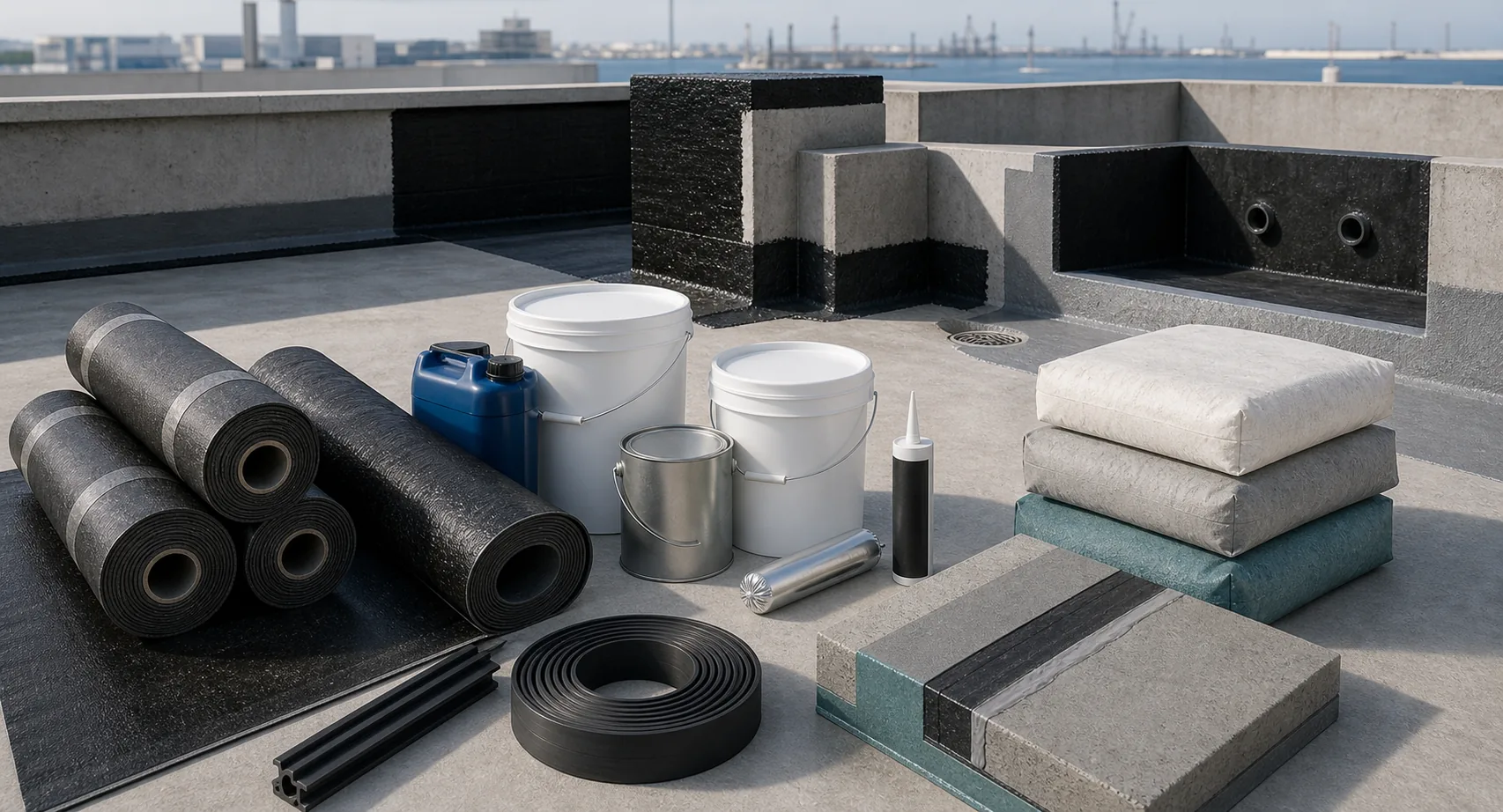
BOQ review and product route selection for contractors, consultants and procurement teams.Inquiry support should include city, delivery need, package quantity and documentation request.Waterproofing and damp-proofing are separated by exposure, pressure, substrate and protection need.
Fast routing
Choose the product family by site requirement
Jump to the category that matches the job condition. Each section includes detailed descriptions, typical usage and quotation notes.
Detailed product map
Products, descriptions and practical usage
The following product notes are rewritten for buyer clarity and should be checked against current TDS/SDS, project specification and manufacturer data before procurement or installation.
Bonding and admixture inquiries should start with substrate condition, repair depth and whether the material is used as a primer, additive or slurry coat.
01
Bonding Agents & Admixtures
Latex and synthetic emulsion additives used to improve bond, workability and repair performance when old concrete, new screeds, mortars or patching work need a reliable interface.
On renovation and maintenance work, the right bonding route is often decided before the repair mortar is selected. Old concrete, dusty screeds, porous masonry and patched floor zones all behave differently, so SolidDrops asks for the existing surface condition and the intended layer build-up before recommending a product route.
Selection note: Ask for substrate condition, old-to-new concrete interface, screed thickness, repair depth, water exposure, traffic and whether the product will be used as a primer, additive or slurry coat.
Water-resistant bonding agent and mortar/concrete admixture
Binachem Binabond
A synthetic emulsion route for old-to-new concrete bonding and cementitious repair mixes. Useful when site-mixed mortars, tile bedding, screeds or resurfacing work need better adhesion and reduced mismatch at the substrate.
Typical usage
Bonding fresh concrete, topping or repair mortar to existing concrete.
Improving tile adhesive, grout and screed mixes when a polymer-modified route is required.
Floor restoration, levelling, patching and masonry dressing.
Renders, floor screeds and patching mortars for maintenance and renovation work.
Re-emulsifiable bonding agent for mortar and concrete
Binachem LA-100
A water-resistant bonding and admixture product used where cementitious resurfacing, structural repair or topping work requires improved bond between existing and new materials.
Typical usage
Bond coat for new concrete poured over existing concrete.
Admixture for renders, screeds, patching mortars and resurfacing mixes.
Concrete floor restoration, floor levelling and masonry patch dressing.
Topping and repair mortar where controlled workability and bond are important.
Best-fit areas: Repair screeds, render coats, slab overlays, patching areas and masonry surfaces.
Quote detail: Send substrate age, roughness, water exposure, repair thickness, approximate area and package quantity.
Concrete repair product choice changes by defect depth, vertical or overhead access, steel exposure and finishing requirement.
02
Concrete Repair
Epoxy putties, repair mortars and water-resistant plaster systems for spalls, honeycombing, surface defects, structural concrete repair and substrate levelling before finishing.
Concrete repair is not only about filling a damaged area. Procurement teams should separate structural patching, cosmetic fairing, water-resistant plastering and epoxy putty work because each route has different surface preparation, thickness, curing and documentation needs.
Selection note: Separate cosmetic fairing from structural repair. Confirm vertical or overhead work, steel exposure, chloride/sulphate exposure, repair depth, patch size and whether the area needs plastering or tile preparation.
Two-component high-solids epoxy putty
Binachem Epoxy – NF (P)
A hard-curing epoxy putty used for bonding and localized repair where concrete, steel and void filling need a strong adhesive repair material instead of a cementitious mortar.
Typical usage
Bonding concrete elements and bonding steel to concrete.
Repairing damaged concrete, cracks, spalls and voids.
Vertical honeycombed concrete repair and overhead soffit-style repair locations.
Localized bridge, abutment or similar structural repair detailing where an epoxy putty is specified.
Quote detail: Share defect photos, depth, substrate, access side, steel exposure and whether epoxy repair is specified.
Water-resistant premixed plaster
Binachem Premix Plaster – Water Resistant
A polymer-enhanced plaster route for internal and external render coats, surface mending and levelling where water resistance and smooth concrete finishing are required.
Typical usage
Rendering, plastering, mending and spall repair.
Smooth finishing over porous or rough concrete surfaces.
Internal and external plaster coats on suitable concrete substrates.
Substrate levelling before finishing work.
Best-fit areas: Walls, concrete surfaces, repair patches, rendered zones and finishing layers.
Quote detail: Provide surface area, thickness range, internal/external exposure, finish expectation and city.
Polymer-modified cementitious repair mortar
Binachem REM Concrete Repair Mortar
A heavy-duty repair mortar route for concrete, precast, aerated concrete and cementitious structures where durable reinstatement and strong bond are required.
Typical usage
Concrete pipe, precast and structural concrete repairs.
Honeycombing and damaged concrete patching.
Durable render or repair topping where salt, sulphate or chloride exposure is a concern.
Levelling concrete before thin-bed tiling or finishing.
Best-fit areas: Structural patches, precast elements, pipes, honeycombed areas and concrete repair preparation.
Quote detail: Share patch size, expected thickness, exposure, reinforcement condition, area and site location.
For grouts, the quote should include gap depth, load, vibration, chemical exposure and the installation window.
03
Grouts
Epoxy and cementitious grout routes for anchors, base plates, bridge bearings, machine supports, cavities, tile joints and infrastructure repair interfaces.
Grout selection is strongly tied to the installation detail. A tile joint, machine base plate, bridge bearing and anchor pocket may all use the word grout, but they do not need the same performance route. The page now explains this difference in buyer language before listing products.
Selection note: Confirm whether the grout is load-bearing, tile-joint, chemical-resistant, non-shrink, epoxy or cementitious. Gap depth, dynamic load, water exposure, vibration and installation window control the right route.
Three-component solvent-free epoxy grout
Binachem Epoxy MR
A flowable epoxy grout route for tight clearances, dynamic loads and chemically demanding conditions where cement grout may not provide the required resistance.
Typical usage
Grouting bolts, anchors, holes and concrete cavities.
Crane rail, railroad track, transfer runway and material-handling track rehabilitation.
Precision alignment under dynamic load conditions.
Marine structure maintenance, bridge bearings and reinforced-column void filling.
Best-fit areas: Base plates, industrial rails, anchors, machinery, bridge interfaces and marine repair areas.
Quote detail: Send gap depth, base plate size, load/vibration details, exposure chemicals, access and curing window.
Non-shrink cementitious grout
Binachem Expan-G / formerly Expan-M1
A non-metallic cementitious grout route for base plates, precast assembly, bridge bearings and reinforcement anchoring where non-shrink performance is required in thinner grout gaps.
Typical usage
Filling gaps up to roughly 25 mm where the project specification permits.
Precast reinforced or prestressed concrete assembly.
Bridge bearings, concrete jacketing and mounting plates for heavy machinery.
Pipe closures in tanks or pools and anchoring steel bars.
Best-fit areas: Base plates, precast joints, tanks, pools, bridge bearings, columns, beams and footings.
Quote detail: Share gap thickness, volume, load, formwork detail, water exposure and whether it is poured or packed.
High-strength non-shrink cementitious grout
Binachem Expan-M4
A high-strength non-shrink grout route for thicker gaps and heavy-duty concrete or machinery repair situations requiring shock and vibration resistance.
Typical usage
Filling thicker gaps from approximately 10 mm to 200 mm where specified.
Precast assembly, heavy equipment fixing and machinery mounting plates.
Shock- and vibration-exposed industrial supports.
Pipe closures in tanks or pools and steel bar anchoring.
Best-fit areas: Heavy machinery foundations, mounting plates, industrial supports, precast concrete and anchoring.
Quote detail: Send gap thickness, total volume, load class, vibration exposure, temperature and schedule.
Cement-based tile grout
Binachem BSG
A polymer-modified cement grout route for tile joints where water and weather resistance, interior/exterior exposure and clean joint filling are required.
Typical usage
Filling tile joints around 3 mm to 12 mm where compatible with the tile layout.
Wall and floor tile installations.
Interior and exterior residential or commercial tiled areas.
Water- and weather-exposed grout joints where a cementitious grout is suitable.
Best-fit areas: Ceramic tile joints, wall tiles, floors, commercial areas and exterior tile zones.
Quote detail: Provide tile size, joint width, area, interior/exterior exposure, color target and site city.
Tile adhesive inquiries should include tile type, tile size, substrate, wet-zone exposure and interior or exterior use.
04
Tile Adhesives
Cement-based adhesive routes for ceramic, porcelain, marble, granite, mosaic, stone and light commercial tile work across floors, walls and suitable boards or masonry substrates.
Tile adhesive selection depends on more than square meters. Porcelain, marble, granite, mosaic and ceramic tiles have different backs and movement behavior, while gypsum board, cement board, masonry and mortar beds each need compatibility checks before supply.
A tile adhesive route for porcelain, marble, slate and granite where stronger adhesion, water-repellent mortar-bed behavior and compatibility with multiple substrates are required.
Typical usage
Fixing mosaic, ceramic, stoneware, brick and rigid lightweight tiles.
Large-format or dense-backed tiles where a stronger bond route is needed.
Porcelain, marble, slate and granite on indoor or outdoor light-commercial floors.
Gypsum board, cement board, concrete, plasterboard, masonry and mortar-bed substrates where approved.
Quote detail: Share tile type, format, substrate, wet/dry zone, square meters, notch size if known and city.
Waterproofing selection should clarify water pressure, UV exposure, crack movement, traffic and protection layer requirements.
05
Waterproofing
Bituminous, acrylic and cementitious waterproofing routes for roofs, wet areas, basements, foundations, walls, water-retaining structures and damp-proofing details.
Waterproofing failures are often caused by choosing a product family before the exposure is understood. Roof decks, wet rooms, basements, tanks, planters and foundations need different checks for movement, pressure, protection layer, tile build-up and curing conditions.
Selection note: Separate damp-proofing from waterproofing. Confirm positive/negative pressure, traffic, UV, crack movement, potable-water contact, under-tile needs, substrate dampness and protection layer requirements.
Cold-applied solvent-based bituminous coating
Binachem Binafond
A bituminous coating route for horizontal and vertical surfaces, especially foundation and basement-wall protection where damp vapour protection and weather resistance are needed.
Typical usage
Exterior insulation and coating of foundations and basement walls.
Concrete curing support combined with waterproofing and weather-resistant protection.
Cold waterproofing for masonry or concrete cast over bare ground.
Protective coating where corrosion resistance or vapour protection is required.
A seamless acrylic membrane route for internal and external waterproofing, roof-wall protection and under-tile wet-area waterproofing where elastomeric movement handling is required.
Typical usage
Roof decks, walls and protective reflective waterproofing layers.
Under-tile waterproofing for bathrooms, toilets, kitchens and basements.
Crack sealing and repair on suitable substrates.
Waterproofing over concrete, metal, terrazzo, brick, roofing felt or corrugated sheets when compatible.
Best-fit areas: Roofs, wet rooms, basements, walls, concrete decks, metal sheets and refurbishing surfaces.
Quote detail: Send substrate, UV exposure, slope/drainage, cracks, wet-area detail, primer need and square meters.
Bitumen waterproofing emulsion
Binachem Bitu Coat
A bitumen emulsion coating route for below-ground and protective waterproofing where jointless film, soil exposure protection and vapour barrier behavior are required.
Typical usage
Protecting concrete against salty ground water and sealing surface pinholes or hairline cracks.
Below-ground structures such as tunnels, underpasses and foundation surfaces.
Cold waterproofing masonry or concrete poured over bare ground.
Protective coating for foundations, timber, metal, concrete and asbestos surfaces where compatible.
A flexible cementitious slurry route for concrete, cement plaster, masonry and board substrates where water-retaining or wet-zone waterproofing is required.
Typical usage
Potable water tanks, reservoirs, canals and tunnels where approved by specification.
Terraces, wet areas, pits and tanks.
Sludge basins in sewage environments where a cementitious slurry route is suitable.
Below-grade structures such as basements, retaining walls and foundations.
Best-fit areas: Water tanks, wet areas, terraces, basements, retaining walls, canals, tunnels and masonry.
Quote detail: Send water contact type, substrate, crack movement, area, number of coats and curing/protection needs.
Bituminous damp-proofing coating
Binachem Liquid Asphalt
A heavy-bodied bituminous coating route for damp-proofing exterior below-grade walls, cavity walls and protective coating over concrete, masonry, wood, metal or similar compatible surfaces.
Typical usage
Below-grade damp-proofing for walls and foundations.
Lining concrete and masonry planters.
Damp-proofing cavity walls and gypsum board assemblies where compatible.
Exterior coating of pipes, metals, gutters, spouts, foundations and basement interfaces.
Best-fit areas: Foundations, basements, cavity walls, planters, pipes, metal surfaces and gutters.
Quote detail: Share surface material, whether damp-proofing or waterproofing is required, area and exposure conditions.
Source references
Product source citations used for this guide
This page uses ICC/Binachem product pages as research references for product-family mapping, names and typical use cases. SolidDrops rewrites the guidance for buyer clarity and does not claim official distribution, guaranteed stock or manufacturer partnership unless confirmed during quotation.
Before procurement, contractors and consultants should request current TDS, SDS, method statement and project-specific compliance documents for the selected product route.
Construction chemicals, industrial chemicals, water-treatment chemicals, cleaning chemicals and facility chemicals.
06
Pigments
Powder pigments, solvent-based pigments, food-grade colorants where documented, and industrial color solutions.
07
Fire Alarm items
Panels, detectors, call points, sounders, beacons, interface modules, cables and related fire alarm materials.
Service areas
Construction chemical product inquiries across Saudi Arabia
SolidDrops supports product and BOQ inquiries across KSA. Include the city, site location and delivery requirement when sending a request.
Jeddah
Riyadh
Dammam
Jubail
Makkah
Madinah
Tabuk
All Saudi Arabia
FAQ
Building chemicals FAQ for Saudi project buyers
What construction chemical product categories are covered on this page?
This page covers bonding agents, admixtures, concrete repair products, grouts, tile adhesives and waterproofing materials, with related SolidDrops categories such as flooring materials, sports flooring, FRP panels, chemicals trading, pigments and fire alarm items.
Does this page guarantee availability for every brand named here?
No. Brand and product names from ICC/Binachem are used as research references for product mapping and usage guidance. Availability, brand route, equivalent product options and documentation must be confirmed during quotation.
What information should I send for a faster quotation?
Send the product name or category, application area, substrate, city, approximate quantity, exposure conditions, required standards or consultant specification, photos if available, and any SDS or TDS documentation needs.
Which Saudi cities does SolidDrops support?
SolidDrops supports inquiries across Saudi Arabia, including Jeddah, Riyadh, Dammam, Jubail, Makkah, Madinah and Tabuk.
How do I choose between epoxy grout and cementitious grout?
Use the project specification first. Epoxy grout is usually considered for chemical resistance, dynamic load or tight-clearance precision work, while cementitious non-shrink grout is typically used for base plates, precast joints, anchoring and general structural grouting.
How do I choose a waterproofing material?
Confirm whether the area needs damp-proofing or waterproofing, then check substrate, water pressure, crack movement, UV exposure, traffic, wet-area tile build-up, potable-water contact and protection-layer requirements.
Can SolidDrops help compare equivalent product routes?
Yes. Share the required performance, application and specification. SolidDrops can help route the inquiry by product family and clarify which documents or samples are needed before procurement.
Request quotation
Send the product name, usage area and quantity to SolidDrops
For faster response, send your product category, ICC/Binachem reference if applicable, substrate, site condition, quantity, city and required documents. SolidDrops can route the inquiry and help confirm a suitable product path.